

Cd
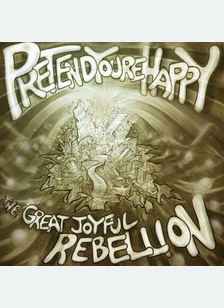
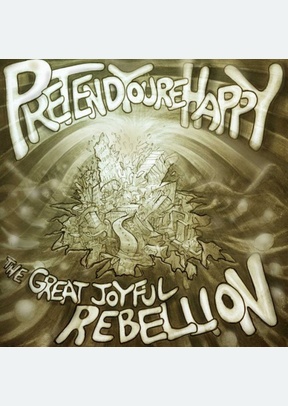
The Great Joyful Rebellion
Cd
The Great Joyful Rebellion
Condition:
NEW
Add to cart & buy it online:
Shipping:
Shipping:
Only available in the US.
Processing time:
Ships in 24 hours
Shipping time:
5-8 business days
Product Guarantee
100% Safe & Secure Checkout
Returns: 30 days after purchase
About this product:
Pretend You're Happy use indie-rock to encourage reverence and catharsis in everyday life. They are currently based out of both Burlington, VT and Bryson City, NC. The band plays in a variety of live forms. One night they might be a stripped down acoustic 2-piece, the next an 8-piece electric entourage including brass, strings, woodwinds, and atmospheric noise. Their music takes influence from divergent genres such as '60s folk revival, NYC hardcore, romantic classical, pop punk, and early jazz. The project is the evolving brainchild of Jeremiah Morelock, who uses it to expand and express his own musical and conceptual horizons. Morelock insists that PYH is first and foremost a creative process. Its social and sonic forms are fluid, and Morelock is always excited to work with new artists. Participants contribute in different ways at different times at varying levels. It is both a group and not a group. It never formed and it will never break up. "The Great Joyful Rebellion" is their second full-length release, put out by DIY Bandits in April, 2011 with the involvement of Fake Four, Inc. The album shifts between textures and arrangements. Now a string ensemble, now a punk band, now a marching band, now a mini orchestra, now a folk solo act, now an early soul outfit, now a collection of swirling noise and feedback, the music rapidly and dramatically shifts between lifeworlds. At the same time, both the individual tracks and the album as a whole display very streamlined, forceful, and lyrical structures and developments. Musical and lyrical themes frame and inhabit the landscape. The album is closer to a rock opera than to a collection of songs. From the beginning "Prelude I - Fantasy" through the "Intermission" track, and in the conclusive "Finale - Joy Forever," the work presents as if it were the soundtrack to a yet to manifest Broadway production; and a very strange one. Paul Comeau from Fifth Estate calls it "a pinnacle of musical craftsmanship. The Great Joyful Rebellion sounds like a soundtrack to a great indie flick, or the performance of a rowdy sort of rag-tag orchestra. There’s an epicness present on many of these songs, a gravitas if you will, that conveys power, but is not above getting rowdy and having a good time." Dan Bolles from VT's 7 Days says: "It sounds like what might happen if They Might Be Giants hooked up with DeVotchKa, or if Dr. Demento went on a Kool-Aid bender with the Polyphonic Spree. Sound weird and wonderful? It is." As for lyrical content, the narrative is as thematic as the music. Like their 2008 self-titled debut, "The Great Joyful Rebellion" is about personal triumph in the midst of constricting socio-cultural forces, but there is a different emphasis. The first album centered on breaking through alienated forms of life, to let utopic moments and authentic relatedness grow and proliferate. This new album is about becoming free of the hegemony of empirical utility tunnel-vision, to infuse experience with the transcendent vitality of the infinite, the open, and the unreal.